High-performance test and measurement instruments rarely have a single universal price. This is especially true for vector signal generators used in RF, microwave and mmWave applications, where the final cost depends on the required frequency range, RF performance, hardware options, software capabilities and additional services.
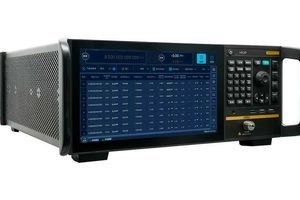
The Ceyear 1466-V Series Vector Signal Generators are designed as a flexible platform for research, development, production testing and advanced communication system validation. Depending on the selected configuration, they can be used for standard RF signal generation, complex vector modulation, 5G NR, WLAN, Bluetooth, LTE, radar-related testing and mmWave applications.
In general, the price of a Ceyear signal generator is structured according to the following principle:
Base model + Selected hardware options + Software capabilities + Additional services
This means that an accurate quotation can only be prepared after the customer’s technical requirements have been defined and the most suitable configuration has been selected.
1. Base Model: The Foundation of the Price
The first and most important pricing factor is the choice of the base model. In the 1466-V Series, the main difference between models is the upper frequency limit. The wider the frequency range, the more advanced the RF architecture of the instrument, and therefore the higher the base price.
Available models include:
| Model | Frequency Range |
|---|---|
| 1466C-V | 6 kHz – 13 GHz |
| 1466D-V | 6 kHz – 20 GHz |
| 1466E-V | 6 kHz – 33 GHz |
| 1466G-V | 6 kHz – 45 GHz |
| 1466H-V | 6 kHz – 53 GHz |
| 1466L-V | 6 kHz – 67 GHz |
For example, if the application requires RF testing up to 13 GHz, the 1466C-V may be the most cost-effective choice. If the project involves mmWave testing, satellite communication, radar applications or high-frequency components, models such as the 1466H-V or 1466L-V may be more appropriate.
2. What Is Included in the Base Model
The base model is not an empty platform. It is already a high-performance vector signal generator with a wide range of capabilities for RF and vector signal testing.
Depending on the selected model, the 1466-V Series provides frequency coverage from 6 kHz up to 67 GHz, high signal purity, wide dynamic range and stable output power. These characteristics make the instruments suitable for testing receivers, transmitters, amplifiers, filters, antenna systems, wireless communication components and other high-frequency devices.
Another important advantage is the ability to support complex modulation scenarios. The 1466-V Series can be used for analogue, digital and vector modulation, as well as for simulating real-world wireless signal environments. This is particularly useful for R&D laboratories, production test systems and service centres where precise and repeatable signal generation is required.
3. Hardware Options: Adapting the Instrument to the Application
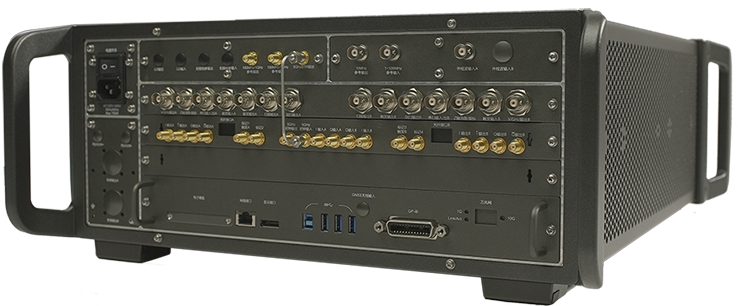
The second major element of the final price is the selection of hardware options. These options extend the physical capabilities of the instrument and are chosen according to the customer’s specific test requirements.
Key hardware options include:
-
Programmable Step Attenuator
A programmable step attenuator extends the output power dynamic range. Depending on the model, 130 dB, 120 dB or 90 dB versions are available. This option is important for receiver testing, sensitivity measurements and applications where precise signal level control is required.
-
Improved Phase Noise Performance
For applications where signal purity is critical, low phase noise and ultra-low phase noise options are available. These options are especially relevant for radar systems, satellite communication, precision receivers and advanced laboratory measurements.
-
High Output Power
High output power options increase the maximum available signal level for specific frequency models. This is useful when the generator is used with lossy test setups, external components or devices under test that require higher input signal levels.
-
Additional Vector Channel B
For more advanced test scenarios, a second vector channel can be added. This enables multi-channel signal generation, MIMO-related testing and more complex signal simulation environments.
-
Extended Internal Modulation Bandwidth
The 1466-V Series can be configured with internal modulation bandwidth options of 500 MHz, 1 GHz or 2 GHz. A wider modulation bandwidth enables the generation of wideband signals used in modern wireless and mobile communication standards.
-
Additional Hardware Features
Other available options include expanded internal memory, wideband external IQ input, phase-coherent connection capability, 100 MHz or 1 GHz reference input/output, rack-mount kit, English-language user interface, aluminium transport case and printed user manual.

4. Software Capabilities: Paying for the Functions You Need
The third pricing component is the selection of software options. These options define what types of signals and test scenarios the generator can create.
Available software capabilities include:
| Option | Function |
|---|---|
| 1466-S01 | Arbitrary waveform modulation |
| 1466-S02 | Multi-tone signal generation |
| 1466-S03 | Intra-pulse modulation |
| 1466-S04 | AWGN generation |
| 1466-S09 | Frequency hopping signal generation |
| 1466-S11 | Analogue modulation: AM, FM, PM |
| 1466-S12 / S13 | Pulse and narrow-pulse modulation |
| 1466-S15 / S16 | Ramp sweep and power sweep |
| 1466-S21 / S22 | Wi-Fi simulation, including Wi-Fi 7 |
| 1466-S23 | Bluetooth signal simulation |
| 1466-S31 / S33 / S34 | GSM/EDGE, LTE/LTE-Advanced, 5G NR |
| 1466-S35 | NB-IoT signal simulation |
| 1466-S61 | DVB-H/T/T2/S2/S2X signal simulation |
This modular approach helps customers avoid paying for functions they do not need. For example, a laboratory working on 5G NR development can add the relevant 5G NR software option, while a production test station for basic RF testing may only require analogue modulation, pulse modulation or power sweep functionality.
5. Additional Services and Calibration
Additional services may also be included in the final price. One of the most important is metrological calibration.
Calibration services are available for each model of the series:
| Model | Calibration Service |
|---|---|
| 1466C-V | 1466C-V-JL |
| 1466D-V | 1466D-V-JL |
| 1466E-V | 1466E-V-JL |
| 1466G-V | 1466G-V-JL |
| 1466H-V | 1466H-V-JL |
| 1466L-V | 1466L-V-JL |
Calibration is particularly important for laboratories, production facilities, service organisations and companies working in regulated industries or environments where measurement traceability is required.
6. Typical Configuration Scenarios
To better understand the pricing logic, it is useful to consider several typical application scenarios.
-
Basic RF Testing up to 13 GHz
For service centres, educational laboratories or production test systems, the 1466C-V with a selected set of essential options may provide the best balance between performance and cost.
-
R&D for Modern Wireless Systems
For laboratories working with LTE, 5G NR, Wi-Fi or Bluetooth, the base model can be expanded with the relevant software standards, wider modulation bandwidth and, if required, improved phase noise performance.
-
High-Frequency and mmWave Applications
For radar testing, satellite communication, high-frequency component validation or mmWave signal generation, models such as the 1466H-V or 1466L-V are more suitable. In such cases, the final price is influenced not only by the wider frequency range, but also by additional options such as high output power, ultra-low phase noise, external IQ input or phase-coherent operation.
Conclusion
The price of a Ceyear 1466-V Series Vector Signal Generator is not based on a single fixed configuration. It is defined by the technical requirements of the customer’s application.
The base model determines the frequency range and core RF performance. Hardware options extend the instrument’s physical capabilities. Software options add the required signal generation and communication standard functions. Additional services, such as calibration, complete the final configuration.
This approach allows customers to choose a generator that matches their exact measurement needs without unnecessary cost. For some applications, a 1466C-V with a basic option set may be sufficient. For more advanced R&D, 5G, WLAN, radar or mmWave scenarios, a higher-frequency model with additional hardware and software capabilities may be the right solution.
Before requesting a quotation, it is recommended to define the key parameters: required frequency range, phase noise performance, output power, modulation types, communication standards, need for a second channel, calibration requirements and accessories. Based on these requirements, a precise and application-specific offer can be prepared.
Where to Buy
The Ceyear 1466-V Series Generators are available for order in the EU through SEA Components GmbH.
For technical details, quotation requests and availability, please contact:
tm@sea-ceyear.com